Health and Safety Policy for Gardeners Sands End
 This health and safety policy for gardeners in Sands End sets out a clear approach to protecting workers, clients, visitors, and anyone else who may be affected by gardening activities. It applies to routine outdoor work, seasonal maintenance, planting, pruning, clearing, lawn care, and the handling of tools, equipment, and materials. The aim is to reduce risk through sensible planning, safe behaviour, and consistent supervision.
Our policy is built around prevention, awareness, and accountability. We recognise that garden work can involve manual handling, sharp tools, uneven ground, exposure to weather, noise, dust, and contact with chemicals or biological hazards. A responsible gardening safety policy helps ensure that every task is assessed before work begins and that suitable precautions are in place. All personnel are expected to follow safe systems of work, report concerns promptly, and act in a way that protects themselves and others.
 Before any work starts, a suitable and sufficient risk assessment should be completed. This includes checking access routes, surface conditions, weather conditions, plant hazards, waste handling, and the likely presence of children, pets, or members of the public. Where a task presents elevated risk, such as tree maintenance, use of powered tools, or work at height, extra controls must be added. A garden maintenance safety policy should never be treated as a formality; it must guide everyday decisions on site.
All employees and contractors must receive appropriate instruction and supervision. No one should use machinery or carry out specialised tasks unless they are competent to do so. Training should cover safe use of hand tools, fuel handling, electrical awareness, lifting techniques, and emergency procedures. Where young workers or new starters are involved, they must be closely supervised until they can demonstrate safe working practice. Records of training, inspections, and incidents should be kept as part of good governance.
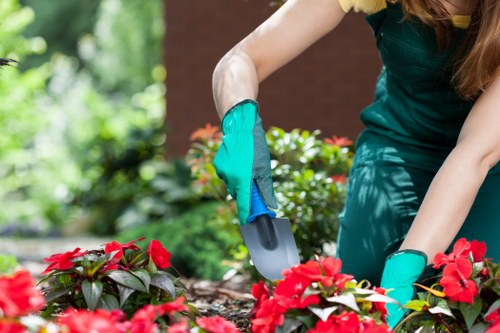
The correct personal protective equipment must be selected for each job and worn properly. Depending on the task, this may include gloves, sturdy footwear, eye protection, hearing protection, high-visibility clothing, and weather-appropriate garments. PPE is not a replacement for safe work methods, but it provides important additional protection. Equipment should be checked before use, maintained in serviceable condition, and replaced when damaged or worn. A policy for gardeners safety and welfare should also address hydration, rest breaks, and protection from prolonged sun or cold exposure.
 Tool and machinery safety is a central part of the policy. All equipment must be suitable for its intended purpose, inspected regularly, and used only by trained persons. Guards, switches, cables, blades, and other critical parts should be examined before each use. Power tools must be disconnected or shut down before cleaning, clearing jams, or making adjustments. Fuel, batteries, and charging equipment should be stored safely and away from heat sources. Any defective item must be removed from service immediately.
Safe manual handling is essential because gardening often involves lifting compost bags, moving pots, carrying materials, and shifting waste. Loads should be assessed before lifting, and mechanical assistance used wherever possible. Team lifting is recommended for bulky or awkward items, while repetitive tasks should be planned to minimise strain. Staff should be encouraged to work at a comfortable height and to avoid twisting movements. A gardeners health and safety policy should clearly state that no one is expected to take unnecessary physical risks.
Control of substances is another important area. Fertilisers, pesticides, cleaning products, fuels, and other chemicals must be stored securely, labelled clearly, and used according to the instructions provided by the manufacturer. Mixing or spraying should only be carried out by competent individuals. Spillages must be contained and cleaned promptly using suitable methods. Where chemical exposure is possible, additional controls such as ventilation, gloves, or face protection may be required. Waste must be segregated and disposed of responsibly, in line with safe handling requirements.
 Emergency planning forms part of a complete health and safety policy for garden services. Suitable arrangements should be in place for first aid, fire safety, accident reporting, and response to severe weather or unexpected hazards. Staff must know how to stop work safely if conditions become unsafe, for example during storms, extreme heat, or icy ground. Incidents, near misses, and dangerous occurrences should be investigated so that lessons can be learned and improvements made.
Supervisors and managers have a duty to monitor working conditions and ensure that this policy is followed consistently. Site checks, equipment inspections, and regular reviews should be used to confirm that controls remain effective. If new tasks, new tools, or changed working conditions introduce additional risk, the policy and associated assessments must be updated. Communication is vital: everyone should understand what is expected, what to do in an emergency, and how to raise concerns without delay.
Visitors and third parties must also be considered. Work areas should be kept as orderly as possible, with clear boundaries around hazardous operations, stored materials, and moving equipment. Tools should never be left unattended in a way that creates a trip or cut hazard. Where work takes place near roads, paths, or shared spaces, extra care is needed to prevent access by unauthorised persons. A gardening safety management policy should always balance efficiency with the duty to protect people.
 This policy will be reviewed regularly to ensure it remains suitable, current, and effective. Any changes in legislation, working methods, equipment, or risk profile will be reflected in updated procedures and training. By following this health and safety policy for gardeners Sands End, the service can maintain high standards, support safe working habits, and deliver reliable garden care with care and professionalism.